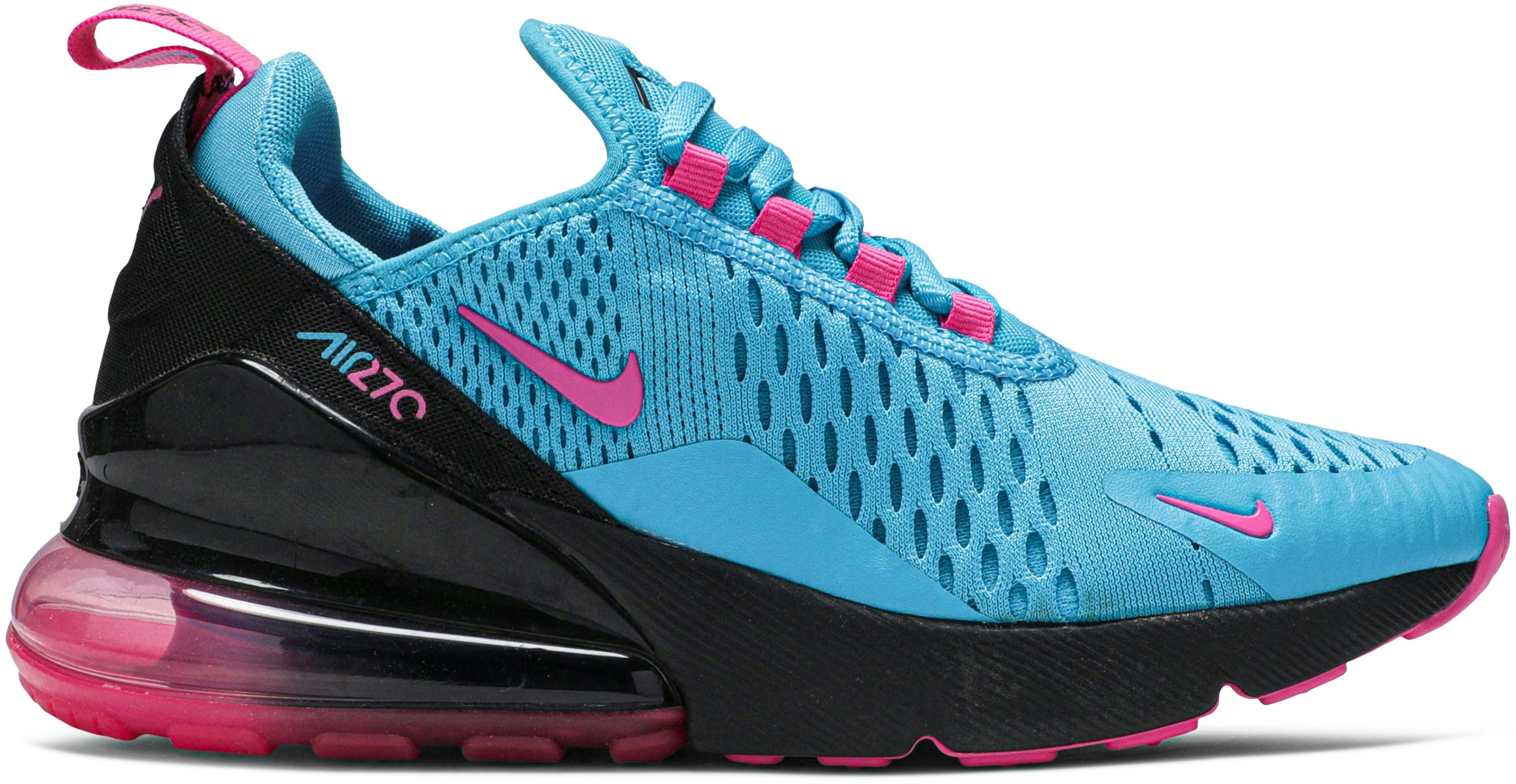
Sneaker culture is fickle. One day everyone is losing their minds over a chunky dad shoe, and the next, they’re back to minimalist leather slabs. But the Nike Air Max 270? It’s different. Since it dropped in 2018, the obsession hasn't really cooled off, and honestly, it’s mostly because of the Air Max 270 colors. Nike didn't just release a shoe; they released a canvas that seems to catch every single trend before it even happens.
Most people don't realize that the 270 was Nike’s first "lifestyle-first" Air Max. Before this, every visible air unit was technically designed for running performance. The 270 changed the math. Designers Dylan Raasch and Marie Odinot looked at the Air Max 93 and the Air Max 180, mashed them together, and gave us that massive 32mm heel. But the tech is just the skeleton. The soul of this shoe is the way the colors bleed into that translucent TPU heel unit. It’s loud. It’s kinda obnoxious. And it works.
The Triple Black and Triple White Paradox
You’d think with all the neon and gradient options, people would want the wildest stuff. Sometimes they do. But if you look at the sales data and what actually stays in stock at Foot Locker or JD Sports, the "Triple Black" and "Triple White" variants are the kings.
The Triple Black Air Max 270 is basically the unofficial uniform of the service industry, commuters, and people who want to look sleek without trying. It’s stealthy. Because the mesh texture on the upper is different from the synthetic overlays and the glossy heel, the shoe isn't just a black blob. It catches the light in different ways. You've got matte areas against shiny ones. It’s depth.
On the flip side, the Triple White version is a nightmare to keep clean, yet it remains a top seller. There is something about that crisp, clinical look that makes the 270 silhouette feel more like a piece of architecture than a piece of footwear. If you’re wearing these, you're carrying a bottle of Jason Markk in your bag. You have to.
When Retro Meets Modern: The OG "Dusty Cactus"
If you want to talk about the Air Max 270 colors that actually define the legacy, you have to start with "Dusty Cactus." This was one of the launch colorways, and it was a direct nod to the Air Max 93.
It uses a "Tiffany-esque" teal on the branding and the massive Air unit, contrasted against white mesh and black overlays. It felt nostalgic but looked futuristic. It’s that specific shade of green-blue that makes sneakerheads do a double-take. It wasn't just a new shoe; it was a bridge to the past.
Nike is smart. They know that to sell a $160 sneaker, you need to trigger a memory. By using the "Dusty Cactus" palette, they told long-time collectors that the 270 was a legitimate member of the family, not just some new-age gimmick.
The Gradient Game and the "Be True" Series
The way the 270 handles color transitions is unique because of that big, wraparound air bubble. Have you seen the "Sunset" or "Sunrise" packs? They use heat-map gradients that shift from deep orange to yellow. It looks like the shoe is literally glowing.
- Be True Collection: In 2018, Nike released the "Be True" 270 to celebrate Pride. It featured a literal rainbow inside the Air unit. This was technically difficult to manufacture. You aren't just painting a surface; you're tinting the pressurized air chamber itself.
- Volt: You can't talk Nike without mentioning Volt. That neon yellow-green that’s bright enough to burn your retinas. When they put Volt on the 270 heel, it becomes the focal point of the entire outfit.
- Cool Grey: For the "I want to be low-key but not boring" crowd. It’s sophisticated.
The variety is actually staggering. Nike releases "SE" (Special Edition) versions and "Premium" versions that swap out the standard mesh for leather or woven materials, which changes how the colors sit. A "University Red" on mesh looks totally different than it does on leather.
Why Some Colors Resell and Others Sit
It’s all about the "Vibe Shift." Right now, earth tones are massive. You’re seeing a lot of "Vactan," "Olive," and "Sanddrift" tones hitting the shelves. A few years ago, these would have sat on clearance racks. Now? They’re the first to go. People are pairing their 270s with baggy cargos and vintage hoodies, so the neon "Cyber" colors are taking a backseat to muted, natural hues.
But there’s also the "Grail" factor. Limited drops like the Travis Scott x Nike Air Max 270 "Cactus Trails" changed the perception of the shoe. That one used a weird, yellowish-sulfur tint on the sole to make it look "vintage." It was polarizing. Some people hated the "dirty" look, while others spent hundreds over retail to get that distressed aesthetic.
Specific Palettes That Actually Hold Value
If you're looking to buy a pair that won't look dated in six months, stick to these specific types of Air Max 270 colors:
- The High-Contrast Classics: White uppers with a single, vivid color on the heel (like "Photo Blue" or "University Red"). These are timeless. They pop without being messy.
- The "Night" Palettes: Navy, Anthracite, and Obsidian. These are more versatile than Triple Black but still hide the scuffs and dirt that come with daily wear.
- The Pastels: Every spring, Nike drops "Lavender" or "Light Bone" versions. These usually have a shorter shelf life but high demand among women sneakerheads.
Performance vs. Lifestyle: Does Color Matter?
Technically, no. A "Hyper Grape" 270 performs the same as a "Wolf Grey" one. But psychologically? It's a whole thing. The 270 is a "tall" shoe. That 32mm lift is significant. When you wear a bright color on that heel, you're emphasizing the height. You’re saying, "Look at this engineering."
If you're someone who is self-conscious about looking like you're wearing "platform sneakers," you go for the darker heel units. They blend into the upper and make the silhouette look more streamlined and less chunky.
Keeping Your Colors Vibrant
The biggest tragedy of the Air Max 270 is the "yellowing" of the Air unit. Over time, oxygen and UV light turn those beautiful clear or translucent bubbles into a murky yellow.
If you have a pair with a clear Air unit, don't leave them in the sun. Seriously. Store them in a cool, dark place. If you have the "Laser Fuchsia" or any of the tinted bubbles, they hide the aging process much better. This is a pro tip: if you plan on keeping your 270s for years, buy a pair with a colored Air unit rather than a perfectly clear one.
Actionable Steps for Your Next Pair
Don't just buy the first pair you see on the app. The Air Max 270 colors change seasonally, and what’s available in January won’t be there in June.
- Check the "By You" Platform: Nike often allows you to customize the 270. If you hate the current seasonal colors, go make your own. You can usually choose the color of the airbag, the mesh, and even the tiny "Swoosh" accents.
- Inspect the Mesh: Some colorways use a tighter knit than others. Darker colors tend to be more durable because they don't show the internal wear-and-tear as easily.
- Size Up Slightly: This is a narrow shoe. Regardless of the color, if you have wide feet, go up half a size. The sleekness of the colors looks better when your foot isn't stretching the mesh to its breaking point.
- Coordinate with the Heel: When styling, don't try to match your shirt to the mesh. Match one small accessory—a hat or socks—to the color of the Air unit. It creates a "bookend" effect for your outfit that looks intentional.
The 270 isn't going anywhere. It’s become a staple like the Air Force 1 or the Air Max 90. Whether you’re going for the "Dusty Cactus" throwback or a "Triple Black" workhorse, the color you choose defines the entire energy of the shoe. Choose the one that matches your daily reality, not just what looks good on a studio-lit website.